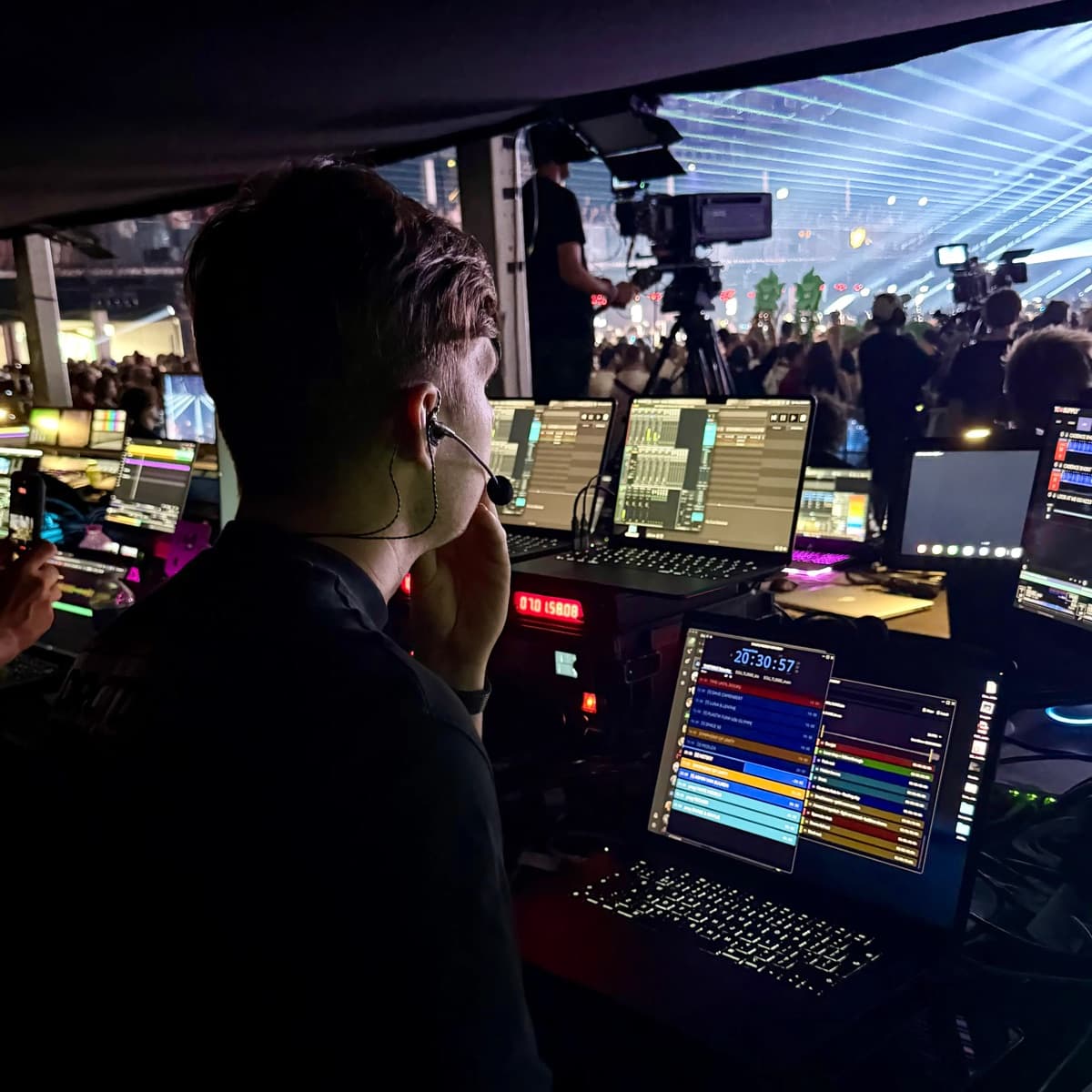
Over the past festival seasons, we've spent a lot of time backstage and at FOH, including across stages at Tomorrowland, watching how show operators work during DJ sets.
Time-line connects to the DJ players and gives operators a real-time view of the performance. It shows the fundamentals you'd expect (track information, BPM, playback position and waveforms) but also analyzes the music locally to identify musical structure.
Builds, drops, breakdowns and other musical sections (what we call Key Points) become visible on the waveform as the DJ plays.
So instead of only hearing a build as it happens, an operator can see that it's approaching. They can see roughly how much time is left until the next musical change and use that information however they want.
From visibility to automation — and beyond
Better visibility is where we're starting, but it's not where we think this ends.
Time-line can already turn what it understands about the music into data and events that other show systems can use. Through OSC and MIDI, musical moments can become inputs for lighting, video, lasers, SFX or more complex show-control workflows.
We're particularly interested in exploring what becomes possible when show technology understands more about the music as it's being performed.
Today, that might mean giving an operator better information or automating a repetitive part of a workflow. Over time, it could mean much more, including new tools that help operators create, experiment and build shows in ways that aren't practical today.
We don't think we have all the answers yet. That's part of why we're putting Time-line into the hands of operators early.
We're building this with the people using it
There are plenty of tools in live production built to solve a very specific technical problem. We want to take a slightly different approach with Time-line.
We're building a company around understanding the problems that exist in live shows and figuring out where better software can genuinely help.
Right now, a lot of our focus is on busked DJ shows: giving operators more context without asking the DJ to change how they perform.
Automation is the next part of that story.
And beyond that, we're excited to see where the people using Time-line take us.
That's why feedback from Time-line customers matters so much to us. If you're using Time-line at FOH, we want to hear what helps, what gets in your way, what information you're still missing and what you wish the software could do.
Some of the best ideas we've had so far have come from simply standing behind operators and watching them work. We'd like to keep doing that.
Time-line Live early access
We've recently started sending out the first invitations to Time-line Live, and we'll be inviting more people from the waitlist over the coming weeks.
If you're already on it, keep an eye on your inbox.
And if you're not, now is a good time to join. We'd love to have more lighting, video, laser, SFX and other live show operators helping us shape what comes next.
Join the Time-line Live waitlist!
Note: Time-line Live requires a Mac with Apple silicon (M1 or newer).